






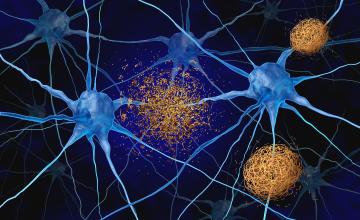


On November 3, 1906, the German clinical psychiatrist and neuroanatomist Alois Alzheimer reported “A...
USA Today Article - A Blood Test for Alzheimer’s? Yes — And Here’s Why It Matters
Jun 18, 2026
With Alzheimer’s disease affecting millions of Americans, clinicians need practical diagnostic tools. Blood‑based biomarkers are gaining attention as an accessible approach to evaluating Alzheimer’s pathology.
Alzheimer’s disease (AD), characterized by amyloid plaques and neurofibrillary tangles, is the most common cause of dementia. An estimated 7.4 million Americans are currently living with the disease, a number projected to nearly double by 2060.1 Although anti-amyloid therapies are now available to slow cognitive decline associated with AD, they work best if given in the early symptomatic stages.2
The challenge is that existing diagnostic modalities have limitations. Positron emission tomography uses radioactive tracers to detect amyloid plaques, but accessibility and unexpected costs make these scans impractical for many patients. Cerebrospinal fluid testing provides another option for evaluating Alzheimer’s disease-associated biomarkers but requires an invasive lumbar puncture. As a result, there is an urgent need for diagnostic approaches that provide accurate results while remaining accessible, economical, and minimally invasive.3
Learn more about the Alzheimer's & Dementia Awareness Month Campaign


Related articles
May 5, 2026
Medical Laboratory Observer (MLO) Article - From imaging to blood: Alzheimer’s diagnostics evolve
Alzheimer’s disease (AD) is the major cause of dementia worldwide that leads to morbidity, long‑term care utilization, and significant healthcare...
Mar 31, 2026
Integration of ADx NeuroSciences Within Fujirebio Unleashes a World of New Possibilities
Fujirebio Europe N.V. will formally and fully integrate ADx NeuroSciences N.V. into its organization on April 1, 2026. This completes a process that...
Mar 31, 2026
CAP Today Article - Alzheimer's blood tests poised to lead
For a pathology that is invariably associated with dimming—of memory, of relationships, of personality—
Alzheimer’s disease has been linked to...
Nov 19, 2025
When To Use Blood-Based Biomarkers For Alzheimer's Disease Assessment
Accelerating Alzheimer’s diagnosis with blood-based biomarker testing
Studies indicate that patients may wait an average of more than three years for...
Sep 25, 2025
How Can You Diagnose Alzheimer's at the Earliest Stages?
Diagnosing Alzheimer’s at the earliest stages
An early Alzheimer’s diagnosis has never been more important — or more attainable — than it is today...
Aug 27, 2025
The Future of Alzheimer's Disease Diagnosis
What is the future of Alzheimer's disease diagnosis?
Two anti-amyloid drugs are now available to patients with mild cognitive impairment (MCI) or mild...
Jun 25, 2025
Everything You Need to Know About Amyloid Presence and Alzheimer’s Disease-modifying Therapies
Confirming amyloid pathology before administering Alzheimer’s disease-modifying therapies.
Approximately seven million Americans are currently living...
May 20, 2025
Video - The Scientist Symposium: Understanding Disease Through Biomarkers
The Evolution of AD Diagnosis: The Role of Biomarkers
Biomarkers are transforming the landscape of disease detection and diagnosis—especially in the...
May 8, 2025
Modern Alzheimer’s Diagnosis: What Clinicians Need to Know About Biomarkers and Staging
What PET scans, CSF assays, and blood tests reveal about Alzheimer’s — and how the A/T/N framework supports earlier, more accurate diagnoses.
Alzheimer...
Nov 13, 2024

Mar 7, 2023
Video - A Neurochemist's Search to Save Memories - Christa's and Charlotte's Story About Alzheimer's Disease
Meet Dr. Charlotte Teunissen, Professor in Neurochemistry, and her lifelong friend Christa Reinhoudt, who was diagnosed with Alzheimer's disease in...

Nov 29, 2022
Scientific Poster - In an Optimized CSF Collection Protocol the pTau181/Aβ1-42 Ratio Increases Preanalytical Variability Over Measuring Aβ1-42 Alone
Background
Core cerebrospinal fluid (CSF) biomarker concentrations for β-amyloid1-42 (Aβ1-
42), β-amyloid1-40 (Aβ1-40), and pTau181 are valuable in...

Oct 14, 2022
Scientific Poster - Prediction of Amyloid PET Status Using the Lumipulse G β Amyloid Ratio (1-42/1-40)
Background
Cerebrospinal fluid ( amyloid biomarker concentrations are valuable
in the assessment of patients for Alzheimer’s dementia ( Automated...

Oct 14, 2022
Scientific Poster - Clinical Validation of the Lumipulse® G β-Amyloid Ratio (1-42/1-40) in a Subset of ADNI CSF Samples
Background
The CSF Lumipulse G β-Amyloid Ratio (1-42/1-40)1 provides a potential
alternative to amyloid PET testing for patients with cognitive...

Oct 14, 2022
Scientific Poster - A fully Automated Method That Combines CSF Concentrations of Lumipulse G β-Amyloid 1-42 and 1-40 Into a Numerical Ratio
Study Objective
The aim of this study was to analytically verify the Lumipulse G
β-Amyloid Ratio (1-42/1-40) assay and evaluate performance of
the...

Oct 14, 2022
Scientific Poster - Pre-analytics of the Aβ1-42/Aβ1-40 Ratio in Fresh and Frozen Samples Using an Optimized CSF Collection Protocol
Background
Cerebrospinal fluid (CSF) biomarkers β-amyloid1-42 (Aβ1-42) and β-amyloid1-40 (Aβ1-40)
have shown high concordance with amyloid PET when...

Oct 14, 2022
Scientific Poster - Reducing Misdiagnosis of Alzheimer’s Disease Pathology Utilizing CSF and Amyloid PET
Background
Utilizing cognitive tests alone, including the Mini-Mental State Examination (MMSE) or the Montreal Cognitive Assessment (MoCA), cannot...

Sep 9, 2022
The evolution of Alzheimer's disease diagnosis
By Rianne Esquivel, PhD and Francesca I. De Simone, PhD
Alzheimer’s disease (AD) is the most common cause of dementia in the elderly and is...
Jan 20, 2021
Comparison of Aβ1-42/Aβ1-40 ratio with other ratios
CSF Aβ1-42/Aβ1-40 is a tool thought to normalize atypical amyloid levels, whereas other ratios might be seen more as interpretation tools that allow...

Nov 16, 2020
The role of Aβ1- 40 in the Aβ1-42/Aβ1- 40 ratio
Aβ1-40 is the most abundant amyloid peptide in CSF, while Aβ1-42 accounts for only about 10% of the total Aβ peptide population.15 Total Aβ...

Oct 13, 2020
Aβ1-42/Aβ1-40 ratio to decrease preanalytical variability
- Aβ1-42 adsorption to plastic is a relevant preanalytical factor in laboratory practice.
- Adsorption to plastic seems to affect different Aβ isoforms...
Sep 9, 2020
Association between the CSF Aβ1- 42/Aβ1-40 ratio and amyloid PET
Most studies have found a strong association between CSF Aβ1-42 and amyloid PET measurements. However, in these studies, 10–20% of healthy individuals...

Jul 29, 2020
Understanding the Aβ1-42/Aβ1-40 ratio in relation to Alzheimer’s Disease
CSF Aβ1-42/Aβ1-40 ratio as a potential tool to detect amyloid deposition


 Powered by Bioz