

Medical Education
The following educational programs are made possible through the generous support of Fujirebio.
CME Activity: Biomarker Use in Cognitive Disorders
MEDICAL EDUCATION | On Demand

WEBINAR SUMMARY:
New disease-modifying treatments have been shown to impact the underlying AD pathology but are likely most beneficial in early AD.
These blood-based biomarkers used in a ratio are highly concordant with CSF measurements and amyloid PET imaging and may lead to improvements in early AD diagnosis. These biomarkers could also advance the development and implementation of disease-modifying treatments in the field of AD and related disorders.
Planned and developed by Medavera, Inc. and supported by an educational grant from Fujirebio Diagnostics, Inc.
OBJECTIVES:
- Review current theories on the neurobiological basis for Alzheimer’s disease.
- Identify the role of plasma biomarkers in establishing the diagnosis of Alzheimer’s disease.
- Establish the importance of an early diagnosis of AD and other types of cognitive impairment.
- Contrast and compare the various AD biomarkers and their use in clinical practice.
- Apply best practices and guidelines to enhance accuracy and reduced uncertainty in detecting amyloid 2 pathology.
ACCREDIATIONS:
- Physicians - This activity has been planned and implemented in accordance with the Essential Areas and Policies of the Accreditation Council for Continuing Medical Education through Synaptiv. Synaptiv is accredited by the ACCME to provide continuing medical education for physicians. Synaptiv designates this educational activity for a maximum of 1.0 AMA PRA Category 1 Credit(s)™ toward the AMA Physician’s Recognition Award. Physicians should only claim credit commensurate with the extent of their participation in the activity.
- Nurses - Educational Review Systems is an approved provider of continuing nursing education by the Alabama State Nursing Association, an accredited approver by the American Nurses Credentialing Center’s Commission on Accreditation. Provider #5-115. This program is approved for 1.0 hours of continuing nursing education. Educational Review Systems is also approved for nursing continuing education by the state of California, the state of Florida and the District of Columbia.
- Laboratory Professionals - Educational Review Systems is an approved provider by P.A.C.E. This program is approved for 1.0 hours of CE credit. This program is also approved for 1.0 Florida CE credits. Florida Board of Clinical Laboratory Personnel approval number: 50-12563.
CE Activity: Navigating the Use of Fluid Biomarker Testing for Early Disease Identification Management
MEDICAL EDUCATION | On Demand

WEBINAR SUMMARY:
The advent of disease-modifying therapies (DMTs) has significantly altered the treatment of Alzheimer’s disease (AD), making timely and accurate diagnosis essential for optimal management. Detecting AD pathology with imaging and fluid biomarkers is critical for identifying patients eligible for these newer therapies. As the fluid biomarker landscape evolves to include blood-based biomarkers alongside cerebrospinal fluid (CSF) testing, clinicians face challenges in integrating these tools into clinical practice. This case-based educational activity aims to equip health care professionals with the knowledge and confidence to appropriately and effectively apply fluid biomarker testing to facilitate early diagnosis and improve the management of patients with early symptomatic AD.
SPEAKER:
Pierre N. Tariot, MD
Banner Alzheimer’s Institute
Research Professor of Psychiatry
University of Arizona College of Medicine
Phoenix, AZ
OBJECTIVES:
- Assess the advantages, limitations, and best practices for the use of CSF biomarkers in the early and accurate diagnosis of AD
- Discuss blood-based biomarkers for AD and their evolving role in research and clinical practice
- Incorporate into clinical practice evidence-based recommendations for the use of AD fluid biomarker testing to support early identification and guide the personalized management of early AD with DMTs
ACCREDIATIONS:
THIS ACTIVITY HAS EXPIRED FOR CREDIT
Expired: December 16, 2025
CME Activity: Pathologies and the Use of Cerebrospinal-Fluid-Based Biomarkers in Alzheimer's Disease
MEDICAL EDUCATION | On Demand
ACTIVITY SUMMARY:
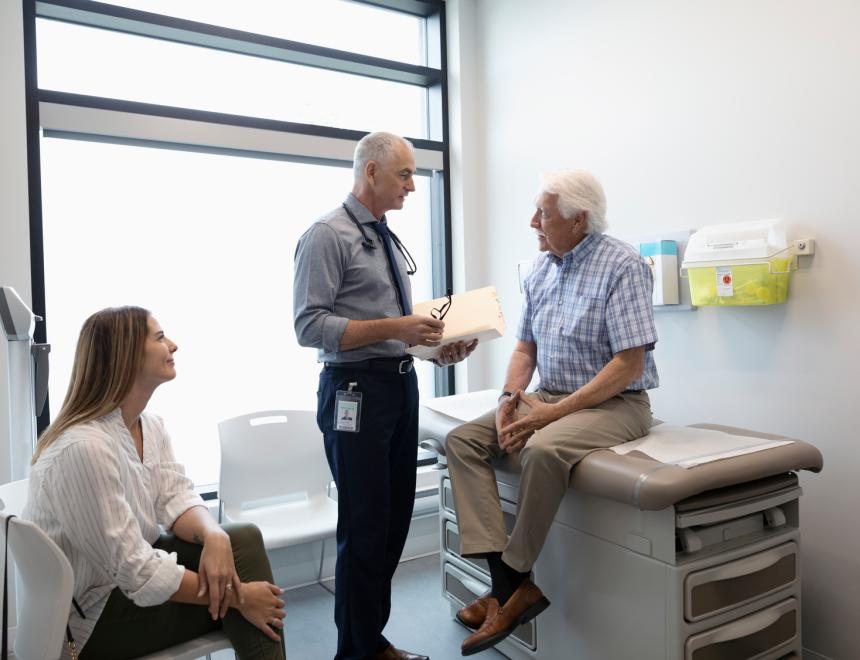
This activity was developed for physicians, physician assistants, and nurses involved in primary care, neurology, and internal medicine, or other healthcare providers involved in the diagnosis of patients with Alzheimer's disease (AD).
Dementia poses a significant economic burden to healthcare systems and society, with over 50 million people currently affected. Disease progression can take many years, and no cure is available. Alzheimer's disease is believed to account for 60% to 80% of dementia cases. The yearly cost of AD and other dementias in the United States is predicted to increase to over $1 trillion by 2050.
AD is a neurodegenerative disease with cognitive, functional, and behavioral impairments. It is characterized by the progressive accumulation of extracellular amyloid beta (Aβ) plaques and intracellular neurofibrillary tangles (NFTs). Up to 30 years ahead of symptoms onset, there may be evidence of AD pathology in the form of Aβ or NFTs, but not of cognitive decline. Early diagnosis can give patients an opportunity to plan ahead. Previous methods of AD diagnosis include postmortem autopsies, costly amyloid positron emission tomography (PET) scans, and unreliable clinical behavioral assessments.
Biomarkers provide a rapid, less expensive, and more quantitative method of diagnosis. Some cerebrospinal fluid (CSF) biomarkers are reliably associated with AD pathology and may provide additional information in clinical diagnosis. Markers such as CSF Aβ42/Aβ40 are concordant with amyloid PET scans and show promise in the detection of AD. Other markers, both CSF and plasma, may also be useful with perspective given to racial disparities and PET concordance.
This educational article will review the neurobiological basis of Alzheimer's disease, identify the role of CSF biomarkers in establishing a diagnosis, and discuss racial disparities seen in AD biomarkers.
FACULTY:
Marwan N. Sabbagh, MD, FAAN
Professor, Department of Neurology
Barrow Neurological Institute
Jane M. Caldwell, PhD
Science and Health Writer
OBJECTIVES:
- Review current theories on the neurobiological basis for AD
- Identify the role of CSF biomarkers in establishing the diagnosis of AD
- Evaluate racial differences in AD biomarkers
ACCREDIATIONS:
